The Personalisation
The model learns your stroke.
Two golfers miss the same putt differently. The model adapts — and the more you play, the more it knows about you.
Stage One · Base Model
Everyone
The average read
The base neural network gives every golfer the physically optimal line. Calibrated to a neutral stroke.
Stage Two · Bias Correction
Pro
Adjusted for your misses
After ten putts, the model starts correcting for your tendencies — angle offsets and pace adjustments that track how you actually stroke a putt.
Stage Three · Your Model
Unlocked
A model, rebuilt for you
Play five rounds, and the neural network itself is retrained on your scan data. Not a correction applied on top. A model rebuilt from the ground up around your game.
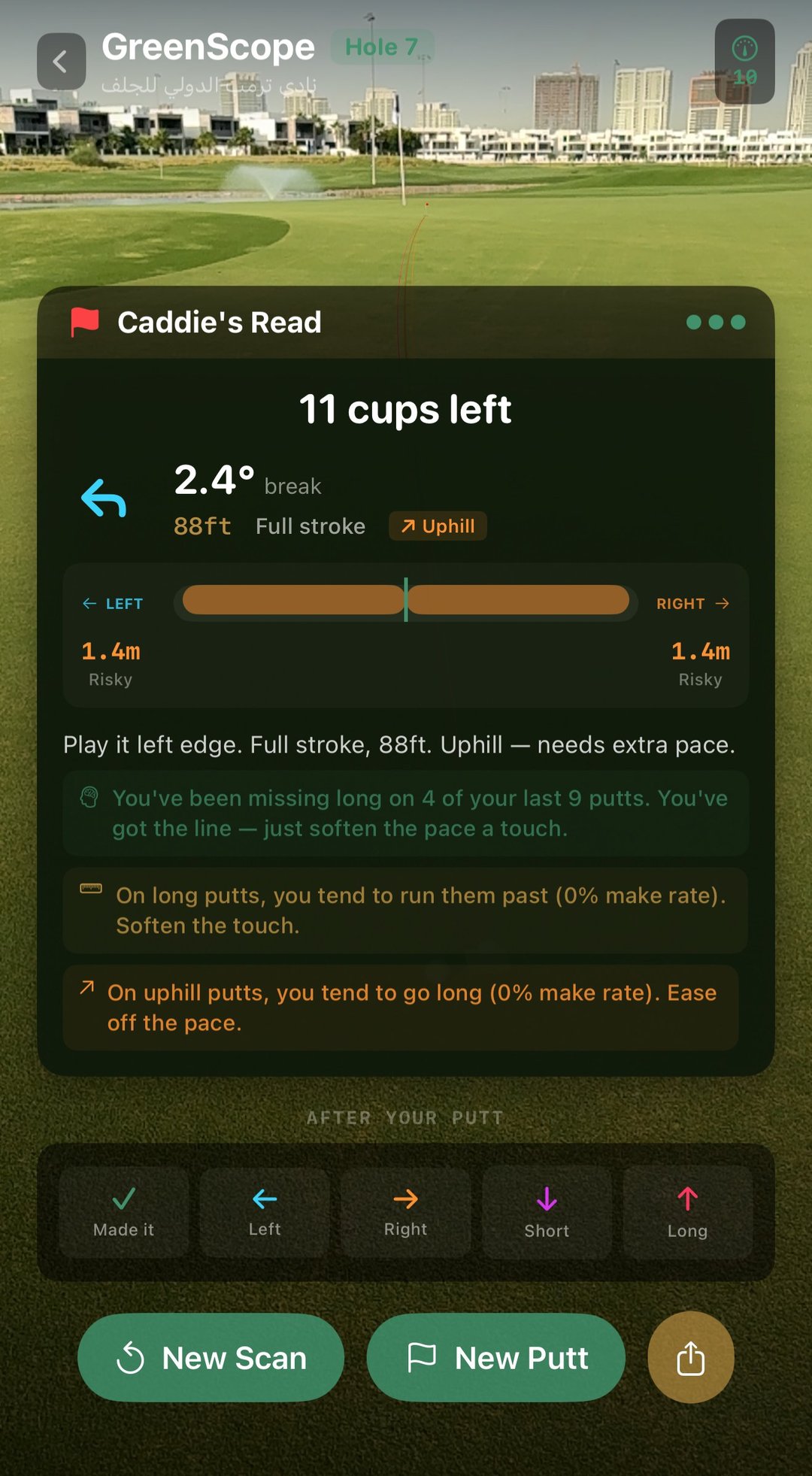
From a real round
Not a future feature.
Already in the app.
Hole 7 at Trump International Dubai. Two and a half degrees of break, eighty-eight feet, uphill — and three callouts the model wrote after watching the last ten putts of the round.
Different golfer, different callouts. Happening on real greens, today.